Four centuries in the turn of a page
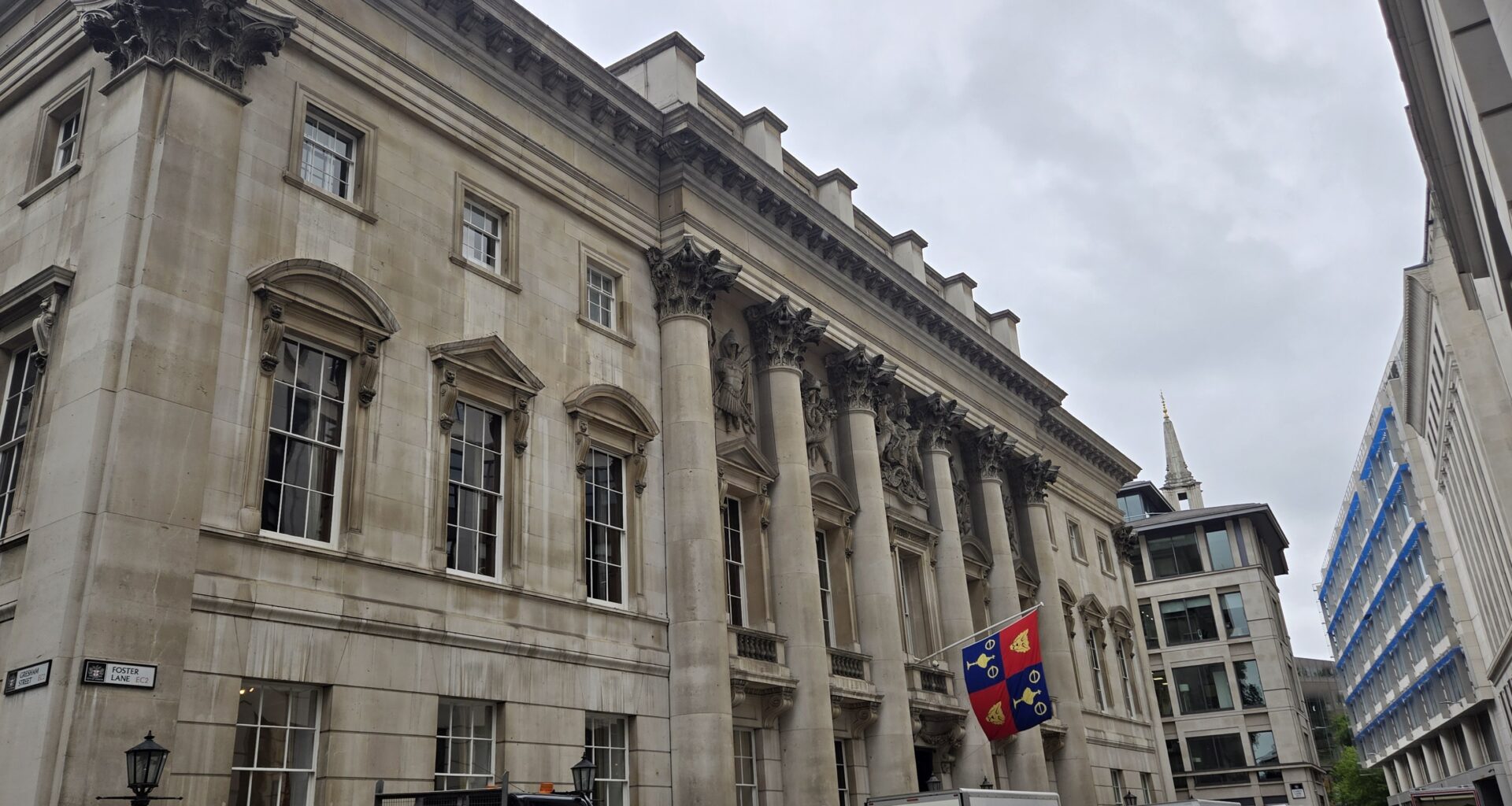
On a summer morning at Goldsmiths’ Hall in London, I opened a book whose parchment leaves had been touched by hands four hundred years before. The clerkly script was neat but alive, entries marching down the page in a rhythm that spoke of craft, of regulation, of lives lived within the rules of one of the City’s oldest guilds. The name “Feake” appeared again and again.
Those records, spanning from the mid-sixteenth century to the early seventeenth, preserved the story of my ancestors: apprenticeships begun and completed, fines levied, Stranger journeymen licensed to work in their shops, children baptized in nearby churches. Their names run like a thread through the very fabric of Elizabethan and Stuart London.
The first James: a craftsman of standing
The earliest of the line, James Feake, was made free of the Goldsmiths’ Company in 1556 and settled on Goldsmiths’ Row in Cheapside. His shop, close to St Paul’s, served both the elite and ordinary citizens of the growing metropolis.
In 1561, he received a commission from the Office of the Queen’s Robes to produce a gilt cup of sixteen ounces, destined for Elizabeth I’s household. That same year, he was fined for a goblet that failed to meet the Company’s strict standards. Both entries tell us something important: the Company watched its members closely, rewarding excellence and punishing failure, and James was prominent enough to attract both commission and scrutiny.
His shop was cosmopolitan. The records note Stranger journeymen—Flemish workers such as Graham Rogers and Paschier van de Bos—licensed to labor at his bench. Apprentices flowed through the door, including William Feake, who became free in 1561, keeping the business in the family.
Rising through the ranks
By the 1580s, a younger James Feake—son of the elder James—was apprenticed to William Feake and freed in 1591. His rise was steady. Three decades later, in 1621, he stood as Upper Warden of the Company, one of its highest offices.
A human note survives in the record of 5 September 1595: after William Feake’s death, his widow Mary consented to the transfer of an apprentice, Charles Thursby, to James the younger. The Company books capture the legal formality, but behind it is a glimpse of a family shop still running, with the widow’s voice heard in the process.
A violent interruption
Yet not all the Feake story is one of upward progress. In December 1596, the name appears in a grim place: the Middlesex Sessions Rolls.
On the third day of that month, Gabriel Spencer, an actor with the Admiral’s Men, fought with a man identified as James Feake, “son of a goldsmith,” at a barber’s house in Shoreditch. In the scuffle, Feake tried to throw a candlestick. Spencer thrust with his rapier, still sheathed, and the blow pierced Feake’s eye and brain. Feake lingered three days before dying.
Theatrical historians like Mark Eccles have traced this episode in the court rolls. Spencer was notorious: he had been imprisoned the year before over the seditious play The Isle of Dogs, and he would meet his own violent end two years later.
On 22 September 1598, in Hoxton Fields, Spencer fought a duel with the playwright Ben Jonson. Jonson killed him, admitted the deed, and avoided hanging by pleading benefit of clergy—reciting a Bible verse to earn leniency. He was branded on the thumb instead. Jonson went on to become Shakespeare’s great rival and collaborator. Through this chain of violence, the Feakes found themselves linked—however unwillingly—to the heart of Elizabethan theater.
Goldsmiths in Lombard Street
Despite that tragedy, the family continued to prosper in the trade.
- John Feake, freed in 1616 after an apprenticeship to the spoonmaker Daniel Cary, set up as a shopkeeper near Gutter Lane and later Lombard Street. His children were baptized at St Vedast Foster Lane and later at St Mary Woolnoth. He appears in the records asking the Wardens to arbitrate a party-wall dispute, fined when clasps broke under inspection, and serving as Renter Warden. He bound apprentices from 1608 into the 1640s, ensuring the family name remained active in the Company.
- The Feakes’ parishes were clustered around their workshops: St Mary Woolnoth, St Vedast, and St Edmund King and Martyr on Lombard Street. Each marked baptisms, marriages, or burials of the family.
The genealogical line
By the turn of the seventeenth century, the Feakes were firmly established.
- James Feake (1567–1625) married Judith Thomas (1568–1625) at St Mary Mounthaw, another City parish tied to the livery companies.
- Their son, James Feake (1598–1639), followed the family craft as a goldsmith. He married Audrey Crompton (1601–1639).
- James was buried at St Edmund King and Martyr on Lombard Street. When he died, his daughter Judith Feake Palmer had to sign off on the transfer of a Lombard Street house, showing that the family not only worked but owned property in the heart of the district.
- Judith’s brother, Robert Feake (1602–1661), emigrated to New England and became one of the founders of Greenwich, Connecticut.
- Judith herself, your eighth great grandmother, carried the name forward into the Palmer family line.
The world around them
The Feakes lived at the intersection of trade, faith, and culture. Their neighbors were other goldsmiths, moneychangers, and merchants. By the mid-seventeenth century, many Lombard Street goldsmiths had begun to act as deposit-takers and lenders—the first step toward modern banking.
The family’s timeline also intersects with the world of the stage: Gabriel Spencer, Christopher Marlowe’s colleagues, Ben Jonson, and by extension Shakespeare himself. The same years that saw Feakes fined for broken clasps or recorded baptisms at St Mary Woolnoth also saw Hamlet performed at the Globe.
The story in full
- 1556: James Feake gains freedom of the Goldsmiths’ Company.
- 1561: Commissioned to make a gilt cup for the Queen’s Robes; fined for substandard work.
- 1562: Stranger journeymen licensed to work in his shop.
- 1582–1591: James the younger apprenticed and freed; rises in Company ranks.
- 1595: Apprentice turned over to James the younger with consent of Mary Feake.
- 1596: Actor Gabriel Spencer kills James Feake in Shoreditch.
- 1598: Ben Jonson kills Spencer in a duel.
- 1601–1639: James Feake (1598–1639) marries Audrey Crompton; they raise children including Judith and Robert.
- 1621: James Feake the younger serves as Upper Warden.
- 1639: James buried at St Edmund King and Martyr; Judith Palmer signs off on transfer of Lombard Street house.
- 1600s–1640s: John Feake active on Gutter Lane and Lombard Street, binding apprentices and serving as Renter Warden.
- 1640s onward: Robert Feake helps establish Greenwich, Connecticut.
Why it matters
The Feakes’ story is one of craft and continuity, but also of sudden violence and unlikely intersections. They were craftsmen trusted with royal commissions, wardens of their Company, shopkeepers on Cheapside and Lombard Street. One of them died in a fight with a hot-tempered actor; another’s son crossed the Atlantic to found a New England town. Their baptisms, marriages, and burials are still tied to the stone churches of the City.
From the bench at Goldsmiths’ Row to a grave on Lombard Street, from a duel in Shoreditch to the founding of Greenwich, Connecticut, the Feakes’ story is inseparable from the larger story of London itself. And in the faint ink of those Company records—still legible four centuries on—the line of family and history is unbroken.