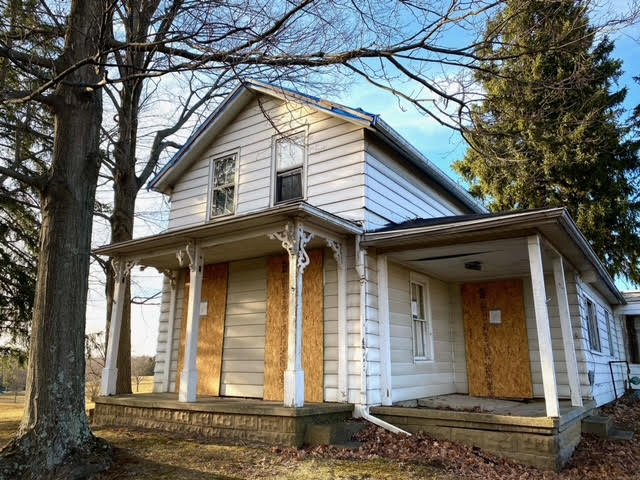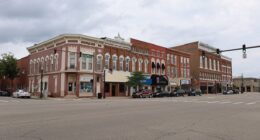
For nearly half a century, one federal program has quietly done what many others struggle to achieve: it has aligned historic preservation with economic development, housing creation, and community revitalization.
The Federal Historic Preservation Tax Incentives Program, administered by the National Park Service in partnership with State Historic Preservation Offices, continues to demonstrate that preservation is not simply about saving buildings. It is about investing in places.
The newly released Fiscal Year 2025 Annual Report makes that case with unusual clarity. It can be read in its entirety here –> https://www.novoco.com/public-media/documents/nps-htc-report-2025-annual-03052026.pdf
The Big Picture: Scale, Longevity, and Impact
Since its creation in 1976, the program has supported more than 51,000 completed rehabilitation projects, leveraging over $135.76 billion in private investment nationwide.
That level of sustained activity places the Historic Tax Credit in a category of its own. It is not a niche incentive. It is the federal government’s most significant tool dedicated specifically to historic preservation, with ripple effects that extend well beyond architecture.
The program works through a straightforward premise: a 20% federal tax credit is offered for the certified rehabilitation of historic, income-producing buildings, provided that work meets established preservation standards.
Fiscal Year 2025: A Year of Continued Momentum
The 2025 numbers reflect a program that is not slowing down.
- $8.64 billion in completed rehabilitation investment
- 939 completed projects (Part 3 certifications)
- Over $13.1 billion in pipeline investment (Part 2 approvals)
- More than 21,900 housing units created or rehabilitated
Perhaps most significant for communities like those across Ohio:
53% of those housing units are designated for low- and moderate-income residents.
This is not incidental. It underscores a core reality that preservation advocates understand well: historic buildings are often among the most effective vehicles for creating attainable housing in existing communities.
Not Just Big Projects—A Tool for Every Community
One of the most important takeaways from the report is the range of project sizes.
- 36% of projects cost under $1 million
- 10% cost under $250,000
This distribution matters.
It confirms that the Historic Tax Credit is not reserved for major urban developments. It is equally relevant to smaller Main Street buildings, rural commercial blocks, and incremental reinvestment efforts that define so much of Ohio’s preservation landscape. For organizations like Preservation Ohio, this reinforces a long-standing message we share around the state: this is a tool that works at every scale.
Ohio’s Position: A Leading State in Activity
Ohio continues to be one of the most active states in the program.
In Fiscal Year 2025 alone:
- 95 Part 2 applications approved
- 61 completed projects
- $549 million in completed rehabilitation investment
- $2.1 billion in cumulative investment over the last five years
Those figures place Ohio firmly among the national leaders. They also reflect a mature ecosystem—one where federal credits are frequently paired with state historic tax credits, local incentives, and private financing to make complex projects feasible.
A Case Study Close to Home: The Newark Arcade
The report’s featured case study offers a familiar and instructive example.
The Newark Arcade, a 1909 glass-roofed commercial and social hub, had fallen into severe disrepair and faced likely demolition. Through a combination of federal and state historic tax credits, private investment, and community support, it has been fully rehabilitated.
The result:
- $21 million investment
- 24 retail spaces
- 19 apartments
- A restored civic gathering place in the heart of downtown
The details matter. The project required near-restoration-level work, including reconstruction of missing historic features and replacement of the signature glass roof. But the broader lesson is even more important: These projects are not just about buildings. They are about restoring function, identity, and economic activity.
Why This Matters Now
At a time when many communities are grappling with:
- underutilized downtown buildings
- housing shortages
- rising construction costs
- and the loss of local character
…the Historic Tax Credit continues to offer a rare combination of economic logic and cultural value.
It creates jobs.
It attracts private investment.
It supports housing.
And it does so while preserving the physical fabric that defines place.
A Strategic Opportunity for Ohio
For Preservation Ohio and its partners, the implications are clear.
The Historic Tax Credit is not simply a program to support.
It is a platform to leverage.
With Ohio already demonstrating strong participation, the opportunity now is to:
- expand awareness in smaller and mid-sized communities
- connect more local developers and property owners to the program
- align local revitalization efforts with available incentives
- and ensure that preservation remains central to economic development strategies
The data in this report does not argue for preservation in abstract terms. It provides measurable, repeatable evidence.
The Bottom Line
After nearly 50 years, the conclusion is difficult to dispute:
Historic preservation, when paired with the right tools, works.
And in Ohio, it is already working at scale. The question moving forward is not whether the model is effective. It is how broadly and strategically it can be applied.
Ohio by the Numbers
Historic Tax Credit Activity (FY 2025)
At a Glance
- 61 completed projects
- 95 projects in the pipeline
- $549 million invested in one year
Investment Snapshot
$549M completed investment
$855M pipeline investment
$2.1B five-year total
Project Pipeline
- 82 historic properties certified
- 95 projects approved for rehab
- 61 projects completed
How Ohio Compares
- Among top-performing states nationally
- Part of $8.64B annual national investment
- Strong use of federal + state credits
Why It Matters
- Supports downtown reinvestment
- Creates housing through adaptive reuse
- Keeps historic buildings viable