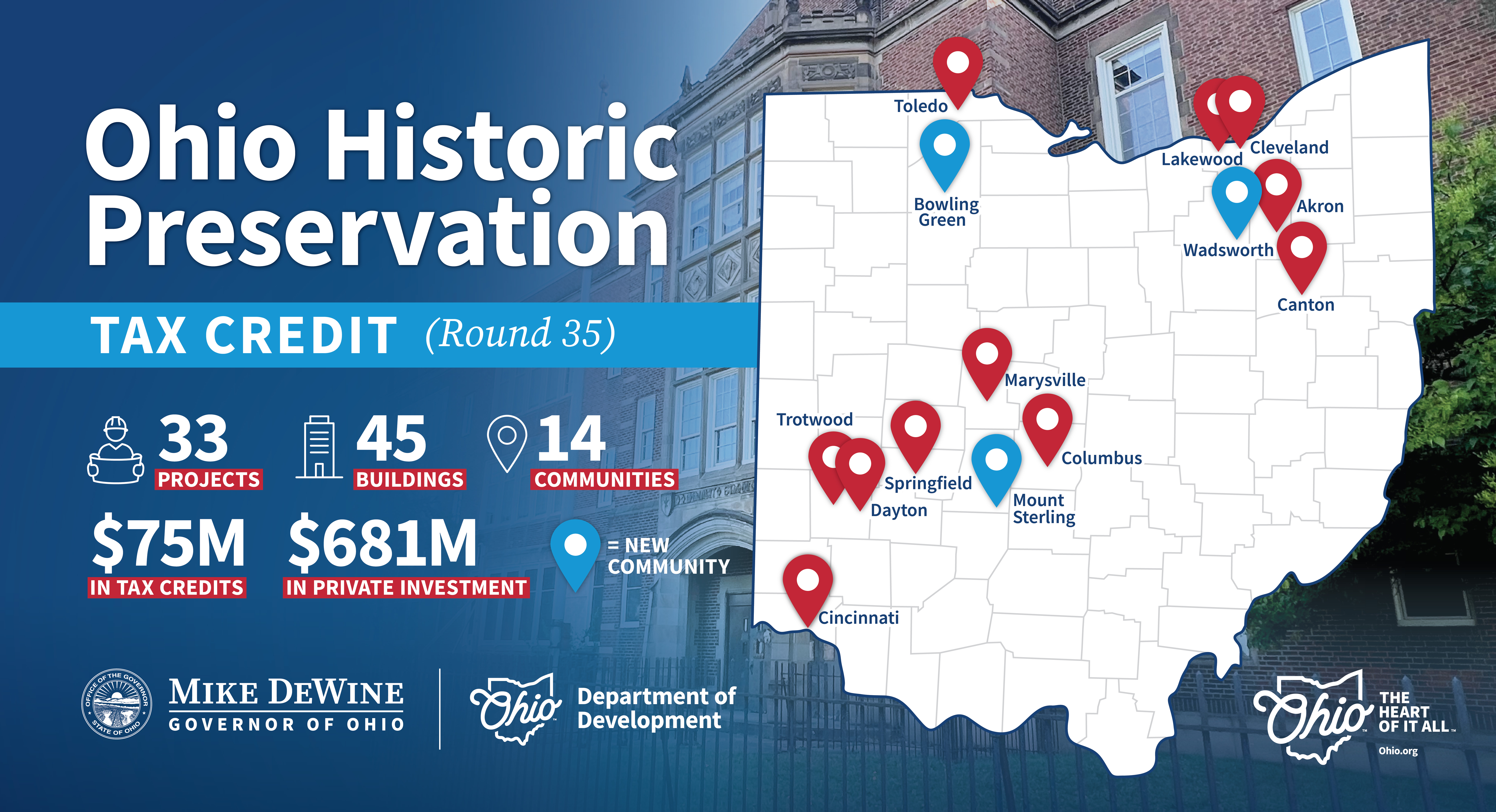

Governor Mike DeWine, Lt. Governor Jim Tressel, and Lydia Mihalik today announced a new round of awards through the Ohio Historic Preservation Tax Credit Program, directing more than $75 million in tax credits to 33 projects preserving 45 historic buildings across the state.
Those projects are expected to leverage approximately $681 million in private investment. That number alone makes the case, but it only tells part of the story.
Why Old Buildings Still Matter
Historic buildings are not simply artifacts. They are infrastructure already paid for, materials already mined, energy already spent. When reused well, they deliver something modern construction often struggles to replicate: permanence, identity, and a sense of place that people recognize instantly.
Across Ohio, these projects will turn long-vacant structures into housing, offices, shops, and manufacturing spaces. That kind of reuse supports walkable downtowns, attracts employers who value character, and creates neighborhoods that feel lived-in rather than assembled.
Governor DeWine captured the essence of the program by pointing to craftsmanship and character as economic assets. In a competitive landscape where cities chase talent and investment, distinctiveness matters. These buildings give communities something no incentive package can buy.
A Statewide Commitment to Place
This year’s awards span 14 communities: Akron, Bowling Green, Canton, Cincinnati, Cleveland, Columbus, Dayton, Lakewood, Marysville, Mount Sterling, Springfield, Toledo, Trotwood, and Wadsworth. For Mount Sterling and Wadsworth, it is their first time receiving support through the program.
That breadth matters. Historic preservation is often associated with large cities, but Ohio’s smaller communities frequently feel its impact most strongly. A single restored building on a main street can change how a town sees itself and how outsiders experience it.
Lt. Governor Tressel described preservation and progress as working together. In practice, this program shows how that happens. These projects create construction jobs immediately, permanent jobs later, and renewed confidence that local places are worth investing in.
Quality, Standards, and Long-Term Value
The program is administered in partnership with the Ohio History Connection’s State Historic Preservation Office, which ensures projects meet the U.S. Secretary of the Interior’s Standards for Rehabilitation.
That oversight protects what makes these buildings valuable in the first place. It also reassures investors that quality matters and that these projects are built to last.
Mariangela Pfister of the State Historic Preservation Office emphasized another often overlooked benefit: environmental responsibility. Reusing existing buildings reduces waste, conserves materials, and avoids the carbon cost of demolition and new construction. In practical terms, few sustainability strategies are as effective as reuse.
More Than Preservation
Historic tax credits are not about freezing places in time. They are about giving buildings a next chapter that fits today’s needs while respecting yesterday’s work.
Ohio’s continued investment in historic preservation sends a clear message: character is an asset, history has economic value, and the smartest growth often starts with what is already standing.
A full list of the awarded projects with descriptions can be found here.